


 Español


Industry News ·
Industry News ·
Industry News ·
Industry News ·
Industry News ·
Industry News ·
Industry News ·
Industry News ·
Industry News ·
Industry News ·
Industry News ·
Industry News ·
Industry News ·
Industry News ·
Industry News ·
Industry News ·

How Disposable Plastic Food Containers Support Efficient Packaging Operations
Content
A packing line that runs out-of-spec containers does not fail with a single crash. It bleeds time through re-seated lids, re-wrapped trays, and re-labeled boxes across every shift. For food service and retail operations that pack thousands of meals each day, the disposable plastic food packaging container is an operating tool, not just a box. Selected on the right criteria, these containers cut labor, protect food safety, and shorten the time from cook to dispatch.
Why Container Design Drives Packing Line Speed
Disposable plastic food packaging containers accelerate packing operations through three mechanisms: consistent dimensions, repeatable sealing, and nestable geometry.
- Consistent dimensional tolerances. Thermoformed and injection-molded containers hold tight tolerances across millions of units, so lids seat the same way every time. Operators do not pause to force, shim, or re-align a lid that does not match its base.
- Repeatable sealing performance. Snap-on lids, heat-seal films, and tamper-evident closures are engineered to fit the same rim profile. This predictability pushes rework close to zero even at high line speeds.
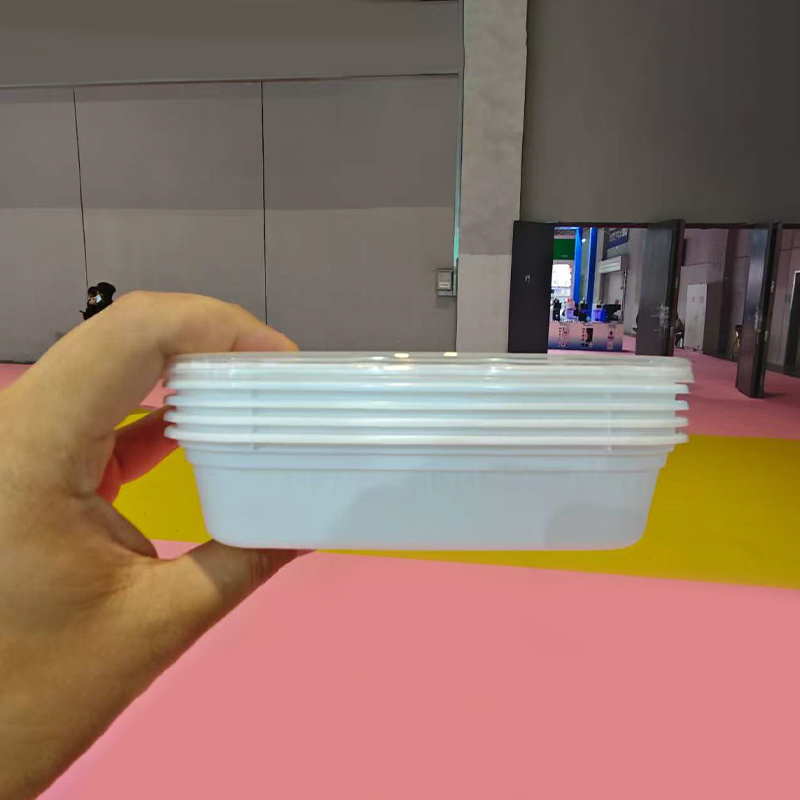
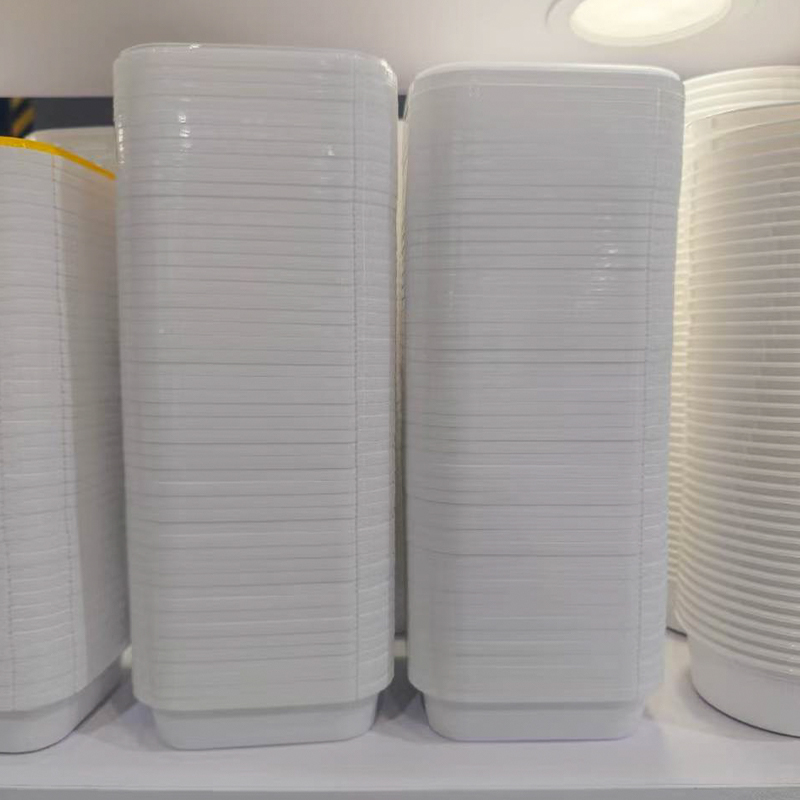
- Nestable, stackable geometry. Tapered sidewalls let empty containers nest for transport and storage, while square and rectangular footprints increase the number of units a packer can reach before re-stocking the table.
Each mechanism removes a specific source of waste: misaligned lids, failed seals, and repeated trips to refill the packing station.
On a line packing 10,000 containers per shift, a 2 percent lid-seating failure causes roughly 200 rework events and can consume nearly one hour of packing labor before the shift ends.
Seal Integrity, Stack Density, and Automation Compatibility
The operational value of a plastic food container is measured by three quantifiable attributes: seal integrity, stack density, and automation compatibility.
Seal integrity decides how many containers survive from the packing station to the customer's door. Stack density decides how many empty containers fit in your storage area and how often workers must restock. Automation compatibility decides whether a container moves through filling, lidding, and labeling machines without jams.
Two forming processes dominate this segment, and each produces a different operational profile.
| Attribute | Thermoformed containers | Injection-molded containers |
| Wall thickness | Thin and uniform | Thicker and more rigid |
| Typical rim tolerance | Good, about plus or minus 0.3 mm | Excellent, about plus or minus 0.1 mm |
| Lid seating behavior | Press-on lids with a continuous seal line | Snap-fit and press-fit options |
| Best fit for | Trays, clamshells, portion packs | Multi-compartment meal trays |
| Hot-fill suitability | Moderate | High |
Containers with rim tolerances of plus or minus 0.3 mm or better feed into automatic lid-closing machines without constant operator adjustment. This is the difference between a supervised line and a fully attended line.
Cost per Finished Order, Not Cost per Container
The cheapest container on a price list is often the most expensive container on the line, because the true measure of cost is the finished order.
Unit price captures only the moment of purchase. Labor, rework, breakage, and storage cost keep accruing after the container reaches your warehouse. A slightly more expensive container with a reliable lid, a rigid rim, and a nestable profile removes those downstream costs.
15-30%Typical labor savings reported by operators who switch to containers with one-step sealing
40%Storage space reduction achieved with nestable tapered container designs
2-5%Rework rate reduction when rim quality and dimensional consistency improve
The relationship between container quality and line throughput can be shown as a set of weighted factors. Seal reliability dominates because a failed seal restarts the whole packing sequence.
Matching Material to Operating Conditions: PE and PLA
Material choice sets the operating envelope of a packaging line, because polyethylene and polylactic acid differ in heat tolerance, moisture barrier, and end-of-life behavior.
Polyethylene (PE) is the default workhorse for food packaging. It forms a dependable moisture barrier, seals quickly across a wide temperature window, and performs well in cold and ambient distribution. Polylactic acid (PLA) comes from renewable feedstocks and is compostable in industrial facilities, but it softens at roughly 40 to 45 degrees Celsius, which suits cold and room-temperature food programs more than hot-fill lines.
Choose PE-coated or PE containers when
- Cold chain and refrigerated menus dominate your operation
- You need high-speed heat sealing with a wide temperature window
- Cost per unit must stay low across very high volumes
- Recyclability in established PE recovery streams matters to your customers
Choose PLA containers when
- Compostability and renewable content are part of your brand promise
- Food temperature stays below 40 degrees Celsius from pack to consumption
- Shelf life is short and moisture exposure is moderate
- Your waste service providers actually collect industrial compost
Match the container material to the food's temperature profile and the customer's disposal stream before you match it to the menu. Operating conditions decide which material is truly efficient.
Supplier Consistency Determines Long-Term Efficiency
Efficient packaging operations are built on supplier consistency, because variation in wall thickness, rim flatness, or coating weight shows up on the line as stoppages, jams, and failed seals.
A manufacturer with in-house coating, printing, and forming lines controls tolerances from raw material to finished container. Anhui Guanxuan Environmental Protection Technology Co., Ltd. operates more than 200 production devices across coating, printing, cup, bowl, plastic product, and cutlery-set lines, manufacturing disposable paper and plastic food packaging for food service and retail applications. From its base in the Yangtze River Delta in Anhui Province, the company supplies customers with short logistics routes, and its "Share your needs, Create your brand" approach lets packing lines run around custom printing and container formats rather than the other way around.
Dimensional consistency means every container in a batch shares the same rim width, wall thickness, and stacking angle, so manual packers and automated equipment handle them at constant speed without adjustments.
Frequently Asked Questions
Quick operational answers for teams selecting disposable food packaging containers.
What are disposable plastic food packaging containers made of?
Most disposable plastic food packaging containers are made from polypropylene, polyethylene, or PET plastic. PLA-based containers offer a compostable alternative, and many paper containers use PE or PLA coatings to provide the same moisture and grease barrier.
Can PLA containers hold hot food?
PLA softens at roughly 40 to 45 degrees Celsius, so it fits cold salads, deli items, and room-temperature meals. For hot or reheated food, PE-coated or conventional plastic containers with higher heat tolerance are the practical choice.
Thermoformed or injection-molded: which is better for packing lines?
Thermoformed containers cover most tray, clamshell, and portion-pack needs at lower tooling cost. Injection-molded containers provide higher rigidity and tighter rim tolerances for heavy meal trays and multi-compartment formats. Choose based on food weight and the sealing method your line uses.
Do plastic food containers work with automated packing equipment?
Yes, when rims and stacking dimensions are consistent. Automated fillers, lid-closers, and labeling machines rely on uniform geometry, so containers with controlled tolerances and flat rim profiles integrate cleanly and reduce jams.
The efficiency of a food packaging line is engineered before the line starts. Container dimensions, seal design, material choice, and supplier consistency either add speed or subtract it. Disposable plastic food packaging containers manufactured to tight tolerances, matched to the food's temperature profile, and supplied by a manufacturer with end-to-end process control are a production decision, not a commodity purchase. Evaluating containers by cost per finished order instead of unit price is the fastest route to higher throughput.

GUANXUAN
Delivering safer, greener packaging solutions for our customers and working with partners to build a more sustainable future
Ready to Begin?
Quick Links
Product Categories
Contact Information
 Email: [email protected]
 Phone: +86-18226619205
 Address: No. 89 Jingwu Road, Economic Development Zone, Quanjiao County, Chuzhou City, Anhui Province, China
QR Code

Copyright © Anhui Guanxuan Environmental Protection Technology Co., Ltd. All rights reserved.
Wholesale Eco-Friendly Packaging Products Manufacturers
