


 Español


Industry News ·
Industry News ·
Industry News ·
Industry News ·
Industry News ·
Industry News ·
Industry News ·
Industry News ·
Industry News ·
Industry News ·
Industry News ·
Industry News ·
Industry News ·
Industry News ·
Industry News ·
Industry News ·

How Disposable Cutlery Sets Drive Foodservice Efficiency and Cut Costs
Content
A catering director responsible for 450 conference lunches described her old morning routine: one kitchen manager, 90 minutes, and 300 hand-wrapped cutlery bundles before service could even start. Forks were washed, dried, counted, and folded into napkins by hand, every single day. After switching to pre-wrapped disposable cutlery sets, that same task took 15 minutes. This article breaks down exactly where those efficiency gains come from, how they change your cost and waste profile, and how to choose cutlery sets that fit your operation.
The Hidden Labor Cost of Traditional Cutlery Handling
Washing, drying, sorting, and wrapping cutlery consumes 10 to 15 percent of back-of-house labor in high-volume kitchens, and most operators never measure that time.
The traditional workflow has five discrete steps: collect, wash, dry, count, and wrap. Every step is a point where labor and time leak. A commercial dishwasher cycle runs 60 to 90 seconds, but the human steps around it add 20 to 30 seconds per place setting. For a 300-seat dining hall, that is roughly 125 minutes of staff time every day spent only on cutlery.
Cutlery logistics: the collection, cleaning, sorting, counting, wrapping, and distribution of eating utensils. It is the single most under-budgeted line item in table-service operations.
The comparison below shows how pre-wrapped sets change the workflow structure.
Traditional workflow
- Collect used cutlery from dining areas
- Wash and dry in a commercial cycle
- Sort forks, knives, and spoons
- Count pieces for each place setting
- Hand-wrap every bundle in a napkin
Pre-wrapped disposable sets
- Open the shipping case once
- Stack sealed sets at the service point
- Hand one set to each guest
- Dispose after use
- No washing, no counting, no wrapping
The difference is structural, not incremental. Disposable cutlery sets remove four of the five workflow steps before service begins.
Speed Up Service Lines with Pre-Wrapped Sets
Pre-wrapped disposable cutlery sets reduce per-order assembly time to nearly zero and let a single server distribute cutlery during a rush without pausing to sort or count pieces.
In a cafeteria or quick-service line, a sealed set is grabbed in one motion, so the queue keeps moving. In catering, cases of pre-wrapped sets stay clean during transport and can be set out in bulk before guests arrive. The consistency is also built in: every wrapper contains exactly one fork, one knife, one spoon, and one napkin, which eliminates the "two forks and no spoon" failures that happen under pressure.
25sec labor saved per place setting
75min saved per 300-cover service
12% faster service-line throughput
A single server can distribute 200 pre-wrapped cutlery sets during a rush without pausing to sort, count, or wrap. That is the core efficiency claim of disposable cutlery in foodservice.
Standardization and Waste Control
Factory-sealed cutlery sets fix the piece count at the source, eliminate over-serving and under-serving, and reduce napkin consumption because each napkin is already folded around the utensils.
Standardized sets prevent a pattern every manager recognizes: one guest receives two forks while the next guest receives none. When every set is identical, service staff stop compensating for missing pieces. Integrated napkins cut separate napkin draw by 10 to 15 percent, and there is no breakage, theft, or emergency replacement purchasing during a service.
The labor comparison below shows what standardization does to total cutlery handling time.
Standardization shifts quality control from the back of your kitchen to the cutlery production line, where it is executed at scale and to a repeatable specification.
Material Options Compared
The best disposable cutlery material for your operation depends on food temperature, holding time, budget, and the waste-management infrastructure available at your venue.
Four materials dominate foodservice cutlery: CPLA, PLA, wood, and polypropylene. Each performs differently with hot food, in a compost stream, and on a cost-per-unit basis.
| Material | Heat resistance | Compostable | Best use |
| CPLA | Up to 90°C | Commercial | Hot entrees, stews, soup service |
| PLA | Up to 50°C | Commercial | Cold meals, salads, desserts |
| Wood | No practical limit | Residential | BBQ, deli, heavy-duty use |
| PP plastic | Up to 100°C | No | High-volume budget service |
Anhui Guanxuan Environmental Protection Technology Co., Ltd., a packaging manufacturer based in the Yangtze River Delta, produces disposable cutlery sets in four wrapper formats: film-wrapped, OPP film-wrapped, PE-coated paper-wrapped, and 100 percent biodegradable PLA-wrapped. That range spans everything from standard takeout to fully compostable catering programs.
What to Look For in a Disposable Cutlery Set
A dependable disposable cutlery set has four non-negotiables: consistent piece count, a tear-resistant wrapper, food-contact safety, and compatibility with your serving workflow.
Use the four checks below when evaluating a supplier.
- Verify piece count consistency. Open five sealed samples from the same case and confirm the contents match every time.
- Test wrapper durability. The wrapper must survive shipping, storage, and being picked up with wet hands without tearing open.
- Check material specifications. Confirm heat tolerance and food-safety compliance for the markets you serve.
- Audit the supplier. Ask about production lines, quality-control processes, and third-party certifications.
A good supplier will tell you exactly what goes into every sealed set and can show you the production process behind it. Consistent packaging protects your brand as much as your cutlery.
Frequently Asked Questions
Are disposable cutlery sets more expensive than reusable cutlery?
Not when the full cost of reusable cutlery is included. Washing, drying, sorting, replacing, and storing utensils consumes water, energy, detergent, floor space, and staff time. Many foodservice operators find that pre-wrapped disposables are cost-neutral or cheaper on a total-service-cost basis, especially when labor is the largest line item.
Can disposable cutlery sets support sustainability goals?
Yes. CPLA, PLA, and wood-based cutlery are compostable in the appropriate facilities, and biodegradable wrappers keep the whole set compostable or recyclable. When choosing a supplier, ask for the exact compostability standard each component meets and check what your local waste hauler accepts.
How many pieces should a disposable cutlery set contain?
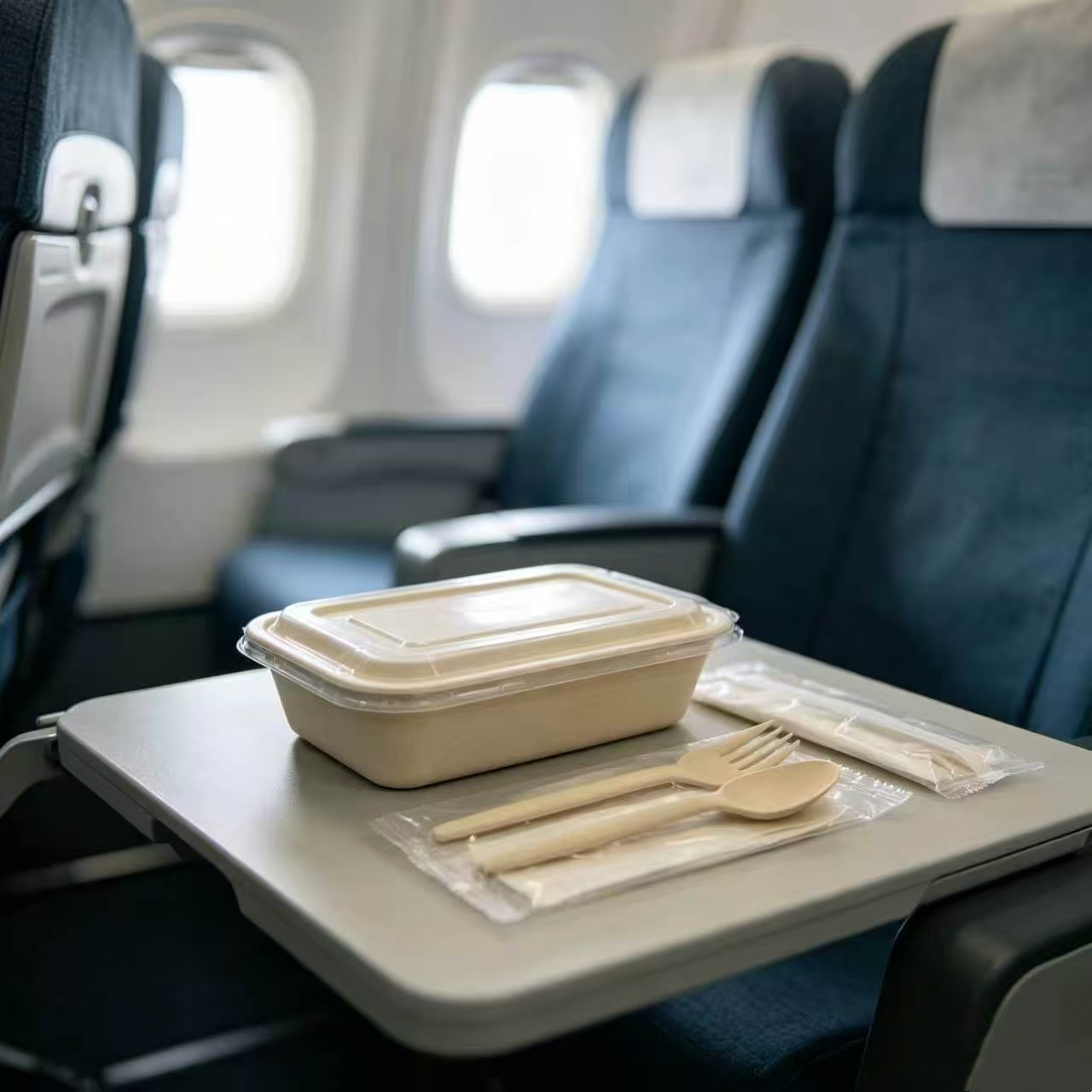
The standard foodservice set includes a fork, knife, spoon, and napkin. Suppliers also produce sets with additional pieces, such as a teaspoon or a wet wipe, for segments like airline catering, hospital tray service, and premium delivery programs.
What should I ask a supplier before ordering disposable cutlery?
Ask about material certifications, heat resistance limits, wrapper seal strength, and piece count consistency. Also confirm whether the packaging is compostable. Anhui Guanxuan Environmental Protection Technology Co., Ltd., for example, operates more than 200 production machines across film lamination, printing, cup forming, bowl forming, and cutlery packaging lines, which gives it direct control over both quality and delivery.
A cutlery decision is a labor decision. The packaging format, the material, and the supplier all determine how many minutes your team spends on each meal service.

GUANXUAN
Delivering safer, greener packaging solutions for our customers and working with partners to build a more sustainable future
Ready to Begin?
Quick Links
Product Categories
Contact Information
 Email: [email protected]
 Phone: +86-18226619205
 Address: No. 89 Jingwu Road, Economic Development Zone, Quanjiao County, Chuzhou City, Anhui Province, China
QR Code

Copyright © Anhui Guanxuan Environmental Protection Technology Co., Ltd. All rights reserved.
Wholesale Eco-Friendly Packaging Products Manufacturers
