

 Español


Industry News ·
Industry News ·
Industry News ·
Industry News ·
Industry News ·
Industry News ·
Industry News ·
Industry News ·
Industry News ·
Industry News ·
Industry News ·
Industry News ·
Industry News ·
Industry News ·
Industry News ·
Industry News ·
How PE and PLA Coatings Prevent Liquid Leakage in Disposable Paper Packaging?
Content
- 1 Why Liquid Leakage Happens in Uncoated Paper Packaging
- 2 What Is a PE Coating and How Does It Stop Leakage?
- 3 What Is a PLA Coating and How Does It Prevent Leakage?
- 4 PE vs PLA: Comparing Leakage-Prevention Performance
- 5 How to Choose Between PE and PLA Coatings
- 6 FAQ: PE and PLA Coatings and Liquid Leakage
Disposable paper packaging has become a staple of modern foodservice, but paper is naturally porous. A cup of hot coffee, a bowl of ramen, or a takeout soup container would quickly soak through without the right protective barrier. This is where PE and PLA coatings come in. These thin polymer layers sit between the liquid and the paper fibers, turning an ordinary paper cup or bowl into a reliable container that stays intact from kitchen to customer. Understanding how these coatings work is essential for anyone who buys or specifies disposable food packaging.
At Anhui Guanxuan Environmental Protection Technology Co., Ltd., we manufacture a wide range of disposable paper cups, bowls, tubs, and food containers with PE- and PLA-coated paper. In this guide, we explain the leakage-prevention mechanisms behind these two coating types, compare their strengths and trade-offs, and help you decide which option best fits your packaging needs.
Why Liquid Leakage Happens in Uncoated Paper Packaging
Paper is made from cellulose fibers formed into a sheet. Between these fibers are tiny gaps and channels. When liquid comes into contact with the sheet, capillary action pulls water into the gaps, and the fibers swell as they absorb moisture. Over time, the liquid travels through the entire thickness of the paper, leading to:
- Surface wetting that weakens the paper structure;
- Edge wicking, where liquid seeps in from cut edges;
- Side-seam leakage in formed cups and bowls;
- Pinhole leaks that develop at weak points in the material.
Even a small amount of moisture can soften the paper, causing the container to lose its shape, leak onto hands and surfaces, or allow grease to leave oily stains. A coating solves this by creating a continuous hydrophobic barrier that blocks liquid from reaching the fibers.
A coating is not just a surface layer. It is the difference between a container that delivers a meal intact and one that falls apart before it reaches the customer.
What Is a PE Coating and How Does It Stop Leakage?
PE stands for polyethylene, the most widely used plastic barrier in disposable paper packaging. During production, a thin film of polyethylene is extruded onto the paper surface. Because polyethylene is hydrophobic, the coated layer repels water and prevents liquid from penetrating the paper fibers.
PE coating offers several advantages for leakage prevention:
- A complete moisture barrier for water, coffee, tea, soup, and other liquids;
- Strong resistance to grease and oil, making it suitable for fried or oily foods;
- Reliable heat-sealing properties, which help create tight side seams in cups and bowls;
- Cost-effective performance at scale, which keeps packaging prices competitive.
That said, PE has limitations. It is petroleum-based, and most PE-coated paper is difficult to recycle in standard paper mills because the plastic layer must be separated from the fibers. Some buyers also look for more sustainable alternatives due to plastic-waste concerns.
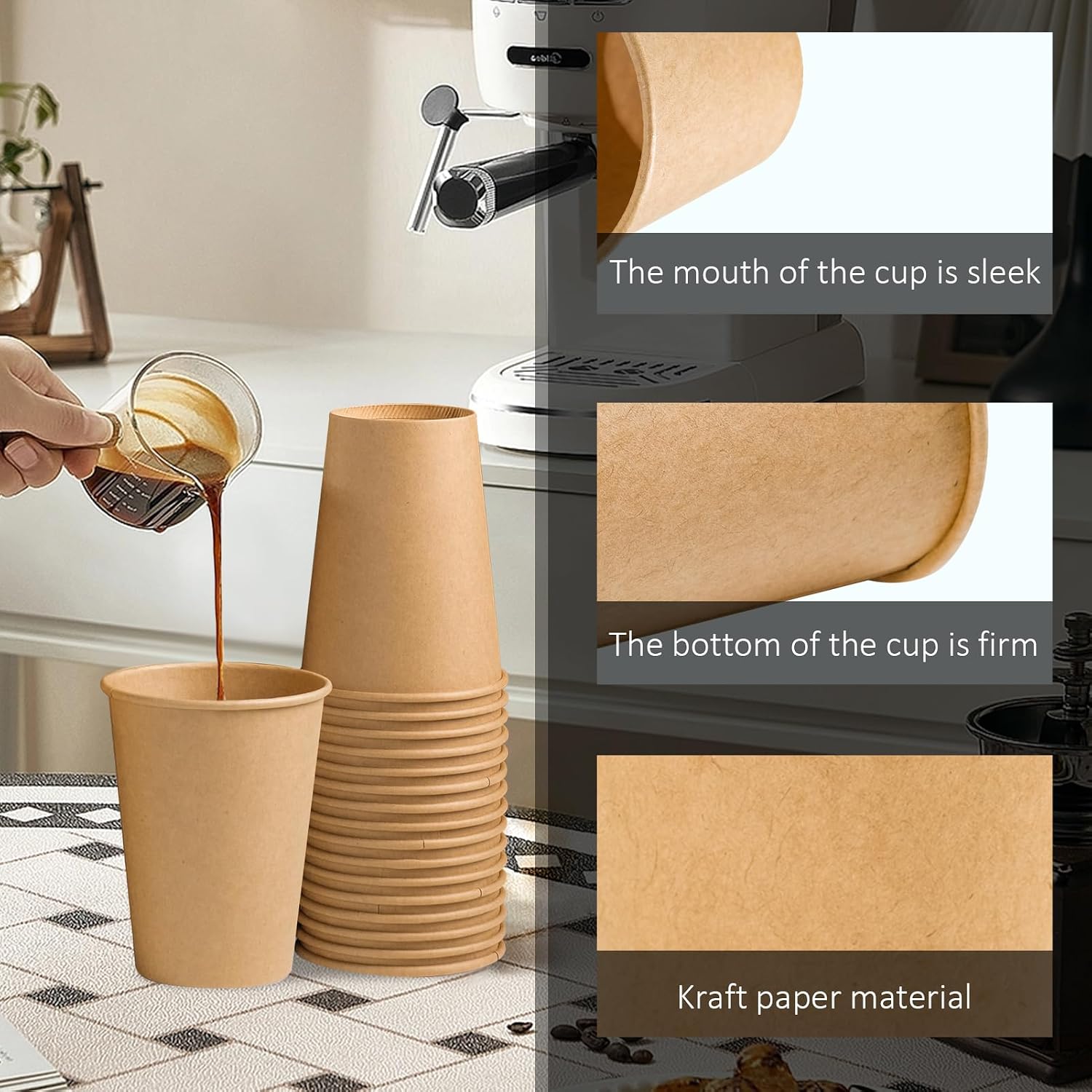
A common example is the standard disposable coffee cup. A double-layer paper coffee cup with a PE lining can hold hot espresso or cold iced drinks without leaking or losing its rigidity. For foodservice operators, this reliability is why PE remains the default choice in many markets.
Barrier Type Hydrophobic film
Hot Liquid High resistance
Source Petroleum
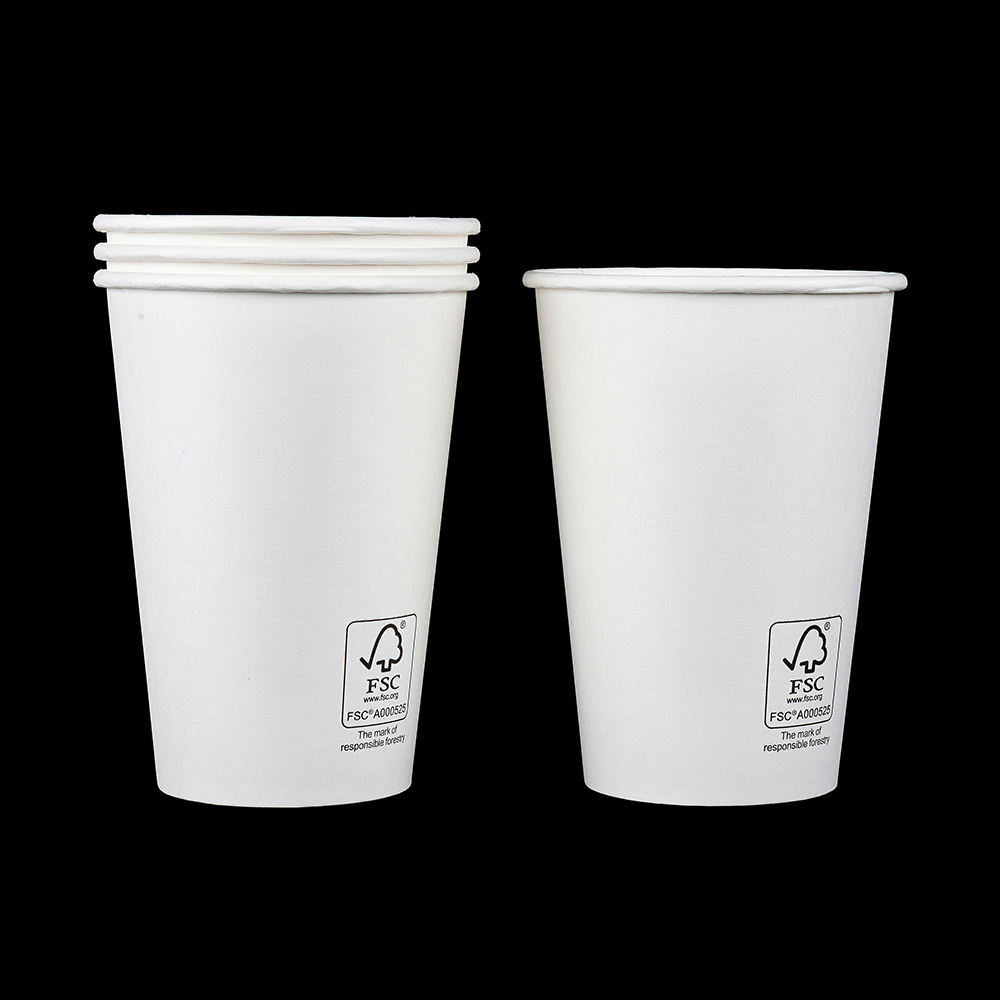 Double-Layer Paper Coffee Cup with PE Coating for Hot and Cold DrinksThis double-wall cup uses a PE coating and air insulation layer to prevent leaks and heat transfer, making it a reliable choice for serving hot coffee or cold beverages without an extra sleeve.View Product →
What Is a PLA Coating and How Does It Prevent Leakage?
PLA, or polylactic acid, is a bioplastic usually derived from fermented plant starch such as corn or sugarcane. PLA coatings are applied to paper in a similar way to PE, forming a film that acts as a barrier against liquid and grease. The key difference is that PLA is designed to biodegrade under industrial composting conditions, offering a more environmentally friendly alternative to conventional plastic coatings.
PLA prevents leakage by forming a hydrophobic layer once applied to the paper. It blocks moisture from reaching the fibers and creates a smooth, even surface that resists wicking and pinholing. PLA-coated paper typically performs well with:
- Cold drinks, smoothies, and chilled desserts where low-temperature resistance matters;
- Light soups and sauces that require short to medium contact time;
- Greasy foods, because PLA provides good oil resistance.
However, PLA is more sensitive to heat than PE. At temperatures above roughly 45 degrees Celsius, PLA can soften and lose barrier strength. For packaging that holds boiling-hot soup or freshly brewed coffee, a thicker PLA coating or an alternative material may be needed.
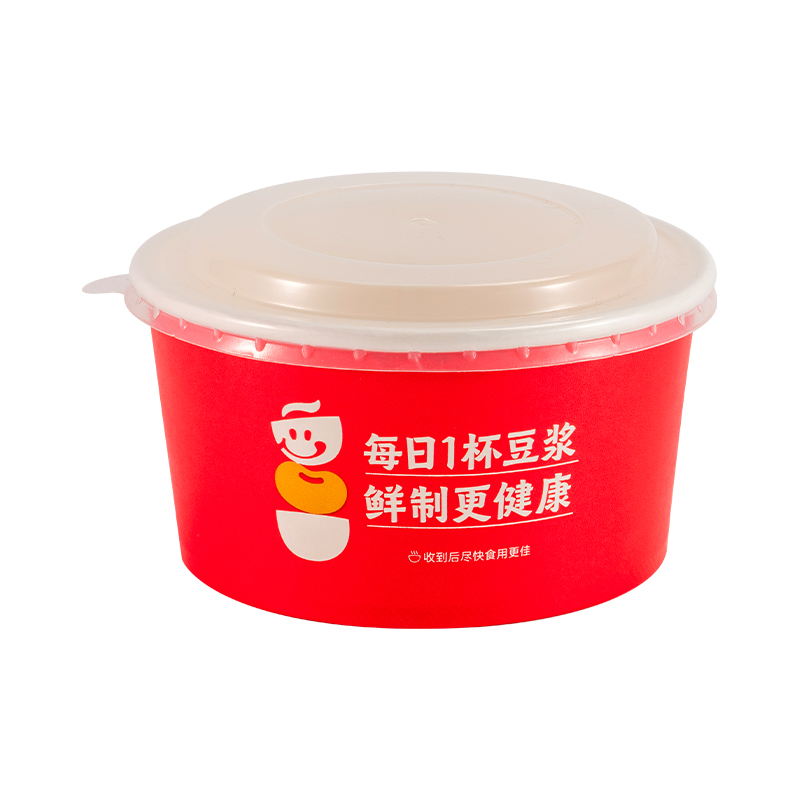
In our production range, a disposable lamian noodles bowl with a lid is a typical example of a container that can be manufactured with a PLA coating. The bowl maintains its structure through the meal, while the coating keeps the broth from seeping through the paper walls.
Barrier Type Hydrophobic film
Hot Liquid Moderate resistance
Source Plant starch
 Disposable Lamian Noodles Bowl with Sealing Lid and PLA CoatingThis lidded bowl is presented as a typical PLA-coated container, offering a leak-proof, microwave-safe option for soups and noodles while maintaining structure during meals.View Product →
PE vs PLA: Comparing Leakage-Prevention Performance
The table below compares PE and PLA coatings across the performance criteria that matter most in disposable paper packaging.
| Property | PE Coating | PLA Coating |
|---|---|---|
| Water leakage barrier | Excellent | Good |
| Oil and grease resistance | Excellent | Good |
| Hot liquid resistance | High | Moderate |
| Cold liquid resistance | Excellent | Excellent |
| Heat-sealing quality | Very good | Good |
| Renewable source | No | Yes |
| Compostable | Not typically | Industrially compostable |
| Cost | Lower | Higher |
Both materials prevent leakage by forming a physical barrier. The right choice depends on the food's temperature, the contact time, and your sustainability goals.
How to Choose Between PE and PLA Coatings
There is no single best coating for every application. Instead, buyers should evaluate the following factors before selecting a material.
1. Food and Beverage Temperature
If you are packaging hot soup, coffee, or freshly cooked meals, PE coating is generally more reliable because it withstands higher temperatures without softening. PLA is better suited for cold drinks, salads, desserts, and foods that will not exceed moderate temperatures.
2. Contact Time and Liquid Volume
A short coffee service places different demands on a coating than a long delivery ride. For extended contact with water-based liquids, PE provides a stronger safety margin. PLA can still work if the coating is thick enough and the container design supports it.
3. Sustainability Targets
For brands trying to reduce petroleum-based plastic, PLA is an attractive option because it comes from renewable plant sources and supports industrial composting. Keep in mind that PLA-coated paper still needs the right commercial composting infrastructure to break down effectively.
4. Recycling Compatibility
Traditional PE-coated paper is not accepted by most paper recycling programs. Even when it is, the plastic and paper layers must be separated. PLA-coated paper may also require special handling, so check with your local recycling facilities before making a large investment.
5. Cost and Manufacturing Efficiency
PE coating is lower in material cost and easier to run at high speed on standard lamination and converting equipment. PLA commands a premium but can be worth it for brands that market a compostable or biobased product story.
At Anhui Guanxuan, our manufacturing facility in the Yangtze River Delta operates more than 200 sets of equipment across lamination, printing, paper cup, paper bowl, and converting lines. This vertical integration allows us to help customers match the right coating to their intended food application while supporting flexible custom sizes, printing, and material selection. Explore our range of food packaging solutions or read about how disposable cutlery sets boost foodservice efficiency.
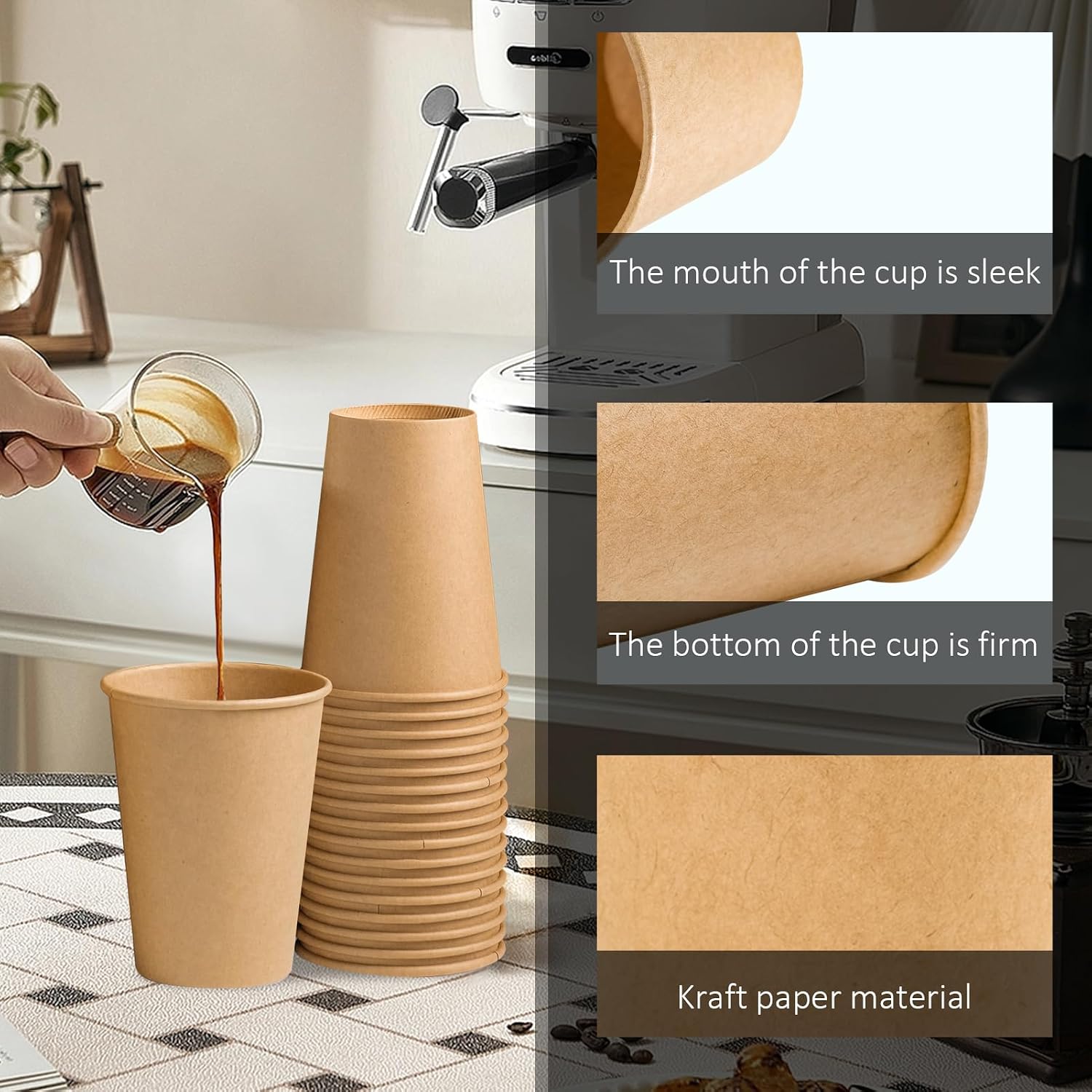 Disposable Double Wall Paper Cup with Custom Logo in Multiple SizesAvailable in 8 to 20 ounces, this double-wall hot drink cup is highlighted for its strong waterproof PE barrier and heat-sealed seams, making it suitable for coffee and tea service.View Product →
FAQ: PE and PLA Coatings and Liquid Leakage
Q1: Can PE-coated paper cups hold hot beverages without leaking?
Yes. PE coating creates a strong waterproof barrier, and heat-sealed side seams prevent liquid from escaping through the cup's weakest points. Standard PE-coated cups are widely used for hot coffee and tea.
Q2: Is PLA coating good for cold drinks?
Yes. PLA performs especially well with cold liquids because it remains stable at low temperatures and provides a reliable barrier against water and condensation.
Q3: Which coating is more eco-friendly, PE or PLA?
PLA is generally considered more eco-friendly because it is derived from renewable plant materials and can be industrially composted. However, its environmental benefit depends on available composting infrastructure and proper disposal.
Q4: Can PE or PLA coatings be applied to paper bowls and food boxes?
Both coatings can be applied to cups, bowls, tubs, food boxes, and other paper packaging formats. The coating thickness and formulation can be adjusted for each specific application.

GUANXUAN
Delivering safer, greener packaging solutions for our customers and working with partners to build a more sustainable future
Ready to Begin?
Quick Links
Product Categories
Contact Information
 Email: [email protected]
 Phone: +86-18226619205
 Address: No. 89 Jingwu Road, Economic Development Zone, Quanjiao County, Chuzhou City, Anhui Province, China
QR Code

Copyright © Anhui Guanxuan Environmental Protection Technology Co., Ltd. All rights reserved.
Wholesale Eco-Friendly Packaging Products Manufacturers
