


 Español


Industry News ·
Industry News ·
Industry News ·
Industry News ·
Industry News ·
Industry News ·
Industry News ·
Industry News ·
Industry News ·
Industry News ·
Industry News ·
Industry News ·
Industry News ·
Industry News ·
Industry News ·
Industry News ·

How Heavy-Duty Paper Popcorn Tubs Prevent Oil Seepage During Long Storage
Content
Popcorn is one of the few snack foods expected to stay crisp and appealing for days inside a closed container. Freshly popped kernels carry butter, flavored oils, and seasonings that act like slow-moving liquids. During long storage, those oils migrate through standard paperboard, leaving stains, softening the paper, and aging the product before its time.
For cinemas, convenience stores, and food brands selling pre-packed popcorn, the tub is both the first impression and the final protection. Understanding how heavy-duty paper popcorn tubs prevent oil seepage during long storage helps buyers choose packaging that keeps popcorn clean and crisp for days rather than hours.
Why Oil Seepage Happens: How Grease Travels Through Paper
Paper is made of cellulose fibers pressed into a dense web. Between the fibers lie microscopic capillaries. Oil has low surface tension and wets cellulose easily, so a trace of butter or flavored oil on the inner wall begins to climb through those capillaries in a process called wicking. Gravity pulls oil downward, while warmth lowers its viscosity and speeds the flow.
Under normal serving conditions, a tub holds popcorn for only a few hours, and seepage never has time to develop. During long storage, however, the process runs without interruption. Oil gradually reaches the outer wall, leaving translucent spots, sticky patches, and weakened paper. With enough time, the tub loses rigidity and becomes hard to stack or handle.
Key takeaway: Oil keeps moving through paper until it reaches the outside. The only reliable defense is a continuous barrier that keeps oil away from the fibers.
What Makes a Paper Popcorn Tub Heavy-Duty?
The term heavy-duty means more than a thicker wall. In a well-engineered tub, oil resistance comes from three layers working together: the barrier coating, the paperboard, and the seam-and-bottom construction.
Continuous Barrier Coating
The most important defense is the barrier coating applied during lamination. A continuous layer of polyethylene (PE) or polylactic acid (PLA) seals the paper surface and closes the capillaries that would otherwise wick oil through. PE coatings are durable, food-safe, and cost-effective, and they add moisture resistance. PLA coatings offer a plant-based alternative for brands moving away from petroleum-derived materials and fit biodegradable packaging programs.
The coating must be continuous: a pinhole or a crease that cracks the film creates a direct pathway for oil. Manufacturers with in-house lamination and converting lines can keep that quality consistent across batches.
High-Grammage Paperboard
Beneath the coating, the paperboard carries the structural load. Heavy-duty tubs use high-grammage board that resists bending and holds its shape under stack pressure. A rigid sidewall protects the coating, since a tub that flexes can crack the film and reopen the capillary paths. The dense fiber structure also slows any oil that reaches the paper, adding a safety margin in long storage.
Heat-Sealed Side Seams and Reinforced Bottom
The side seam is the most fragile point on any tapered paper container. Heavy-duty tubs use a heat-sealed side seam that bonds the coating surfaces together and closes the seam from the inside out, so oil cannot use it as an express lane to the outside.
The bottom needs equal attention. In a standard tub, the bottom is a separate disk folded into the sidewall; if the fold leaves a capillary opening, oil pools around the bottom and migrates downward. Heavy-duty construction uses a tightly folded bottom hem and a heat seal that closes the gap between the disk and the sidewall.
Because the same barrier system is used across our paper tub line, operators can match capacity to application without learning a new material specification. Large-format tubs that carry soups and other oily foods rely on the same PE or PLA barrier and sealed-bottom construction as the popcorn container.
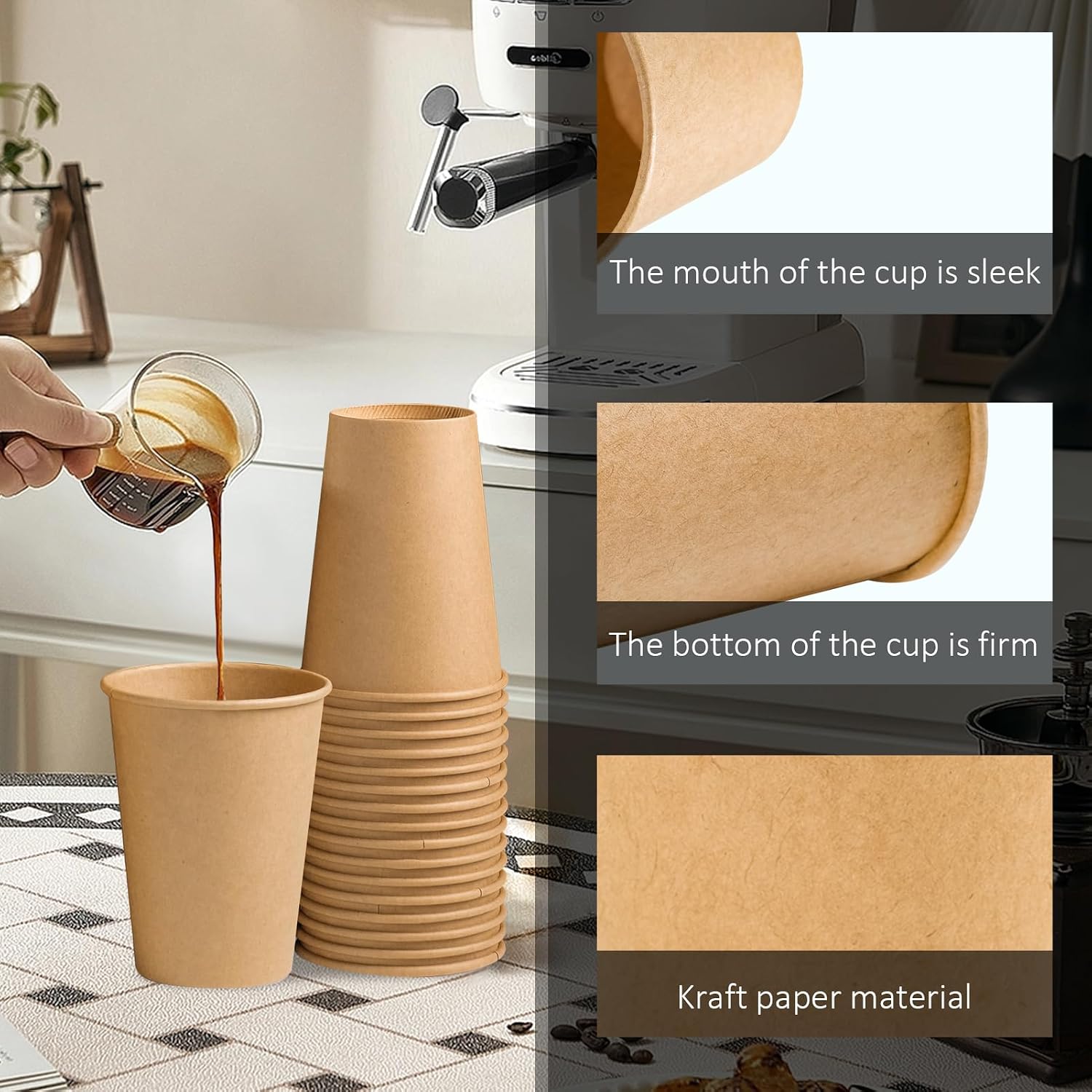 Disposable Double Wall Paper Cup for Hot Drinks with LidThis large 820ml paper cup with a leak-proof lid suits hot soups and porridge. Its food-grade, heat-resistant construction and stackable design make it practical for takeout and commercial packaging.View Product →
Long-Storage Conditions: Heat, Humidity, and Stacking Pressure
Three factors determine whether oil seepage appears during long storage: temperature, humidity, and stacking pressure.
Temperature
Warmth thins oil and accelerates capillary movement. Popcorn kept near a heat source, in a delivery truck, or on a sun-exposed shelf stresses packaging far more than popcorn stored in a cool pantry. Heavy-duty barrier coatings hold their integrity across the normal food storage temperature range, keeping performance consistent through seasonal changes.
Humidity
Paper absorbs moisture from the surrounding air. High humidity softens the fibers and makes the tub more vulnerable to flexing and tearing. The coating doubles as a moisture barrier, shielding the paper from ambient humidity as well as from oil.
Stacking Pressure
When tubs are stacked, the weight of the upper layers presses down on the tubs below. That pressure pushes oil toward the bottom fold and the side seam. A tub with weak sidewalls deforms and concentrates stress at the seam; a heavy-duty tub holds its shape and distributes the weight evenly.
| Factor | Standard Paper Tub | Heavy-Duty Barrier Tub |
|---|---|---|
| Oil migration | Visible within hours | Blocked by continuous coating |
| Heat resistance | Softening under warmth | Stable in food storage range |
| Humidity | Fiber softening, reduced strength | Moisture barrier protects structure |
| Stacking | Seam distortion under load | Rigid walls distribute pressure |
| Storage window | Short serving time | Extended shelf and display life |
Containers that hold up under these conditions keep operations smooth from filling line to final sale.
Choosing Heavy-Duty Popcorn Tubs for Your Business
When selecting tubs for long storage, start with the coating. Confirm that the tub has a continuous PE or PLA barrier rather than a thin surface treatment. Next, check the paperboard weight: heavier board resists flexing and keeps the coating intact. Then inspect the bottom: a flat, well-sealed base with no visible gaps is the clearest sign of a leak-free tub.
Lid fit matters too: a tight lid keeps out dust, slows moisture exchange, and reduces the oxidation that creates stale odors.
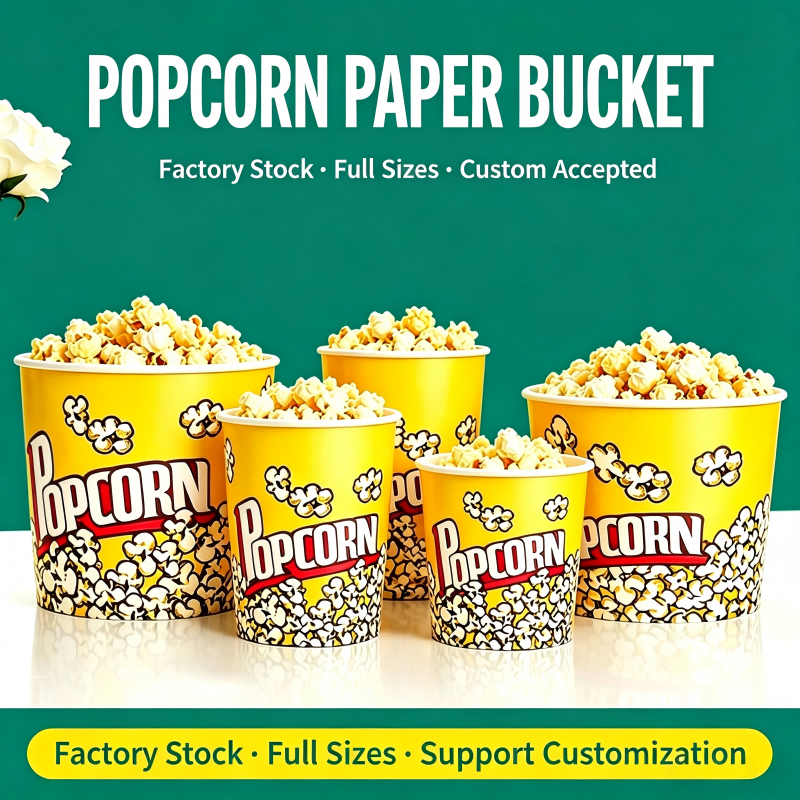
Our popcorn bucket with lid applies this construction in a practical format, pairing a tapered, easy-to-hold body with a matching lid and the same barrier coating used across our paper tub range. It works well for both fresh-service counters and retail shelves.
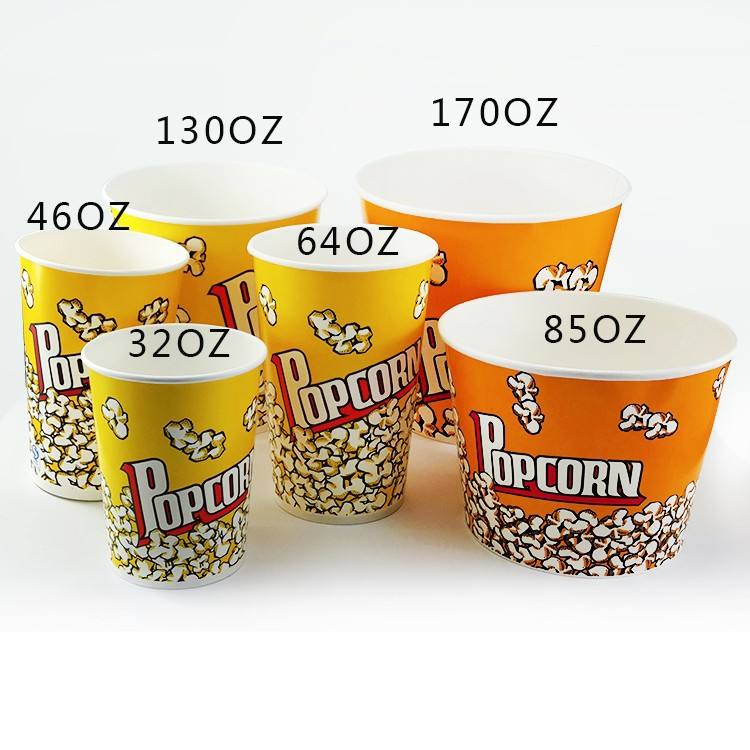 Disposable Popcorn Bucket with Lid and Sturdy ConstructionThis popcorn bucket pairs a tapered, easy-hold body with a dust-preventing lid and the same barrier coating as other paper tubs. It suits cinema, party, and retail servings.View Product →
Customization is also part of the value: printed tubs turn a commodity package into a branded display piece, and printing must never compromise the barrier beneath it. Working with a manufacturer that controls lamination, printing, and converting under one roof shortens lead times and keeps quality consistent. Our full range of custom food packaging solutions follows this integrated approach.
When comparing environmental profiles, weigh PE against PLA carefully. PLA is plant-based and supports compostable packaging strategies where industrial composting is available; PE offers a reliable, widely recycled barrier in conventional paper streams. Reviewing the key factors for choosing eco-friendly packaging can help balance performance goals with sustainability targets.
Frequently Asked Questions
Q1: Can heavy-duty paper popcorn tubs hold hot oil or warm butter?
Yes, for typical popcorn service. The continuous barrier coating keeps hot butter and seasoned oil from soaking through the paper during filling and serving. Heavy-duty tubs are not meant to hold free liquid for long periods, but brief contact with warm oil, the normal use case, is handled safely by the coated barrier.
Q2: How long can popcorn stay in a heavy-duty paper tub?
With a sealed lid and reasonable storage conditions, popcorn generally stays crisp for several days. The barrier coating prevents the oil seepage that would otherwise stain and soften the tub, while the lid controls moisture and dust. Final shelf life depends on the seasoning formula and the ambient environment.
Q3: Are heavy-duty paper popcorn tubs eco-friendly?
Our paper tubs are made with recyclable paperboard, and the coating can be PE or PLA. PLA-coated tubs support biodegradable packaging goals where industrial composting is available, while PE-coated tubs provide oil resistance with broad recycling compatibility. Brands can choose the option that fits their sustainability roadmap.
Q4: Do lids help prevent oil seepage during storage?
Lids help indirectly. They prevent condensation, slow oil oxidation, keep out dust, and reduce compression damage during stacking. The wall coating and bottom seal do the primary work against oil, but a well-fitted lid extends the clean, crisp life of stored popcorn.
Oil seepage is not an inevitable flaw of paper packaging. It is the result of missing barriers, weak seams, or undersized paperboard. Heavy-duty paper popcorn tubs prevent oil seepage during long storage by combining a continuous PE or PLA coating, high-grammage paperboard, and heat-sealed seams and bottoms. For any food business that needs popcorn to stay presentable from production line to final sale, that combination is the difference between a package customers trust and one they put down.

GUANXUAN
Delivering safer, greener packaging solutions for our customers and working with partners to build a more sustainable future
Ready to Begin?
Quick Links
Product Categories
Contact Information
 Email: [email protected]
 Phone: +86-18226619205
 Address: No. 89 Jingwu Road, Economic Development Zone, Quanjiao County, Chuzhou City, Anhui Province, China
QR Code

Copyright © Anhui Guanxuan Environmental Protection Technology Co., Ltd. All rights reserved.
Wholesale Eco-Friendly Packaging Products Manufacturers
