


 Español


Industry News ·
Industry News ·
Industry News ·
Industry News ·
Industry News ·
Industry News ·
Industry News ·
Industry News ·
Industry News ·
Industry News ·
Industry News ·
Industry News ·
Industry News ·
Industry News ·
Industry News ·
Industry News ·

Why High-Clarity Thermoformed Containers Boost Supermarket Impulse Sales
Content
- 1 The Psychology Behind Impulse Buying at the Shelf
- 2 How High-Clarity Thermoformed Containers Create a See-Through Advantage
- 3 Why Thermoforming Fits Supermarket Packaging Needs
- 4 Design Elements That Maximize Impulse Sales
- 5 Practical Ways Supermarkets Can Leverage Clear Containers
- 6 Frequently Asked Questions
Supermarkets are built on quick decisions. Most shoppers arrive with a written or mental list, yet a significant share of the contents of the final basket was never planned. Impulse purchases are decided in seconds, and packaging is one of the strongest silent salespeople in that moment. High-clarity thermoformed containers have become a favorite tool for retailers and food brands because they let the product itself make the pitch.
This article explains why clear thermoformed packaging changes shopper behavior, which design details matter most, and how supermarkets can turn transparency into unplanned sales.
The Psychology Behind Impulse Buying at the Shelf
Impulse purchases are emotional responses triggered by visual cues, perceived value, and decision friction. A shopper passing a chilled deli case or a grab-and-go fixture decides in two or three seconds whether to reach out. In that short window, the package must answer three questions faster than the shopper walks away:
- What is inside, and does it look appetizing?
- Is it fresh, safe, and ready to eat?
- Is it worth the price on the label?
2-3seconds to decide at the shelf
3questions every shopper asks
100%of the product visible through clear walls
When packaging hides the food behind opaque walls or generic graphics, the shopper has to imagine quality. Imagination requires effort, and effort kills impulse decisions. High-clarity containers remove that barrier by showing the real product in its true color, texture, and portion size.
What shoppers can see, they trust; what they trust, they are far more willing to buy on the spot.
How High-Clarity Thermoformed Containers Create a See-Through Advantage
Thermoforming produces containers from thin plastic or RPET sheets that can be made exceptionally transparent. Unlike injection-molded tubs or paper cartons, a thermoformed clamshell or tray lets the food itself become the main visual asset on the shelf.
Visual Appetite Appeal
Golden-skinned roast chicken, layered fruit cups, or bakery tarts glistening under the lights are images no printed design can recreate. Clear walls turn every refrigerated display into a theater of appetite. Shoppers respond to food appearance before they read labels, and transparency puts the strongest selling point directly in front of them.
Freshness and Quality Perception
Clarity also communicates hygiene. A snug, transparent lid signals that the food has been protected from dust, handling, and temperature changes along the supply chain. For supermarket shoppers, that visible layer of protection justifies paying a small premium for prepared foods.
Why Thermoforming Fits Supermarket Packaging Needs
Thermoformed containers support the operational realities of a busy retail floor. They stack cleanly, survive cold-chain transport, and work with standard sealing equipment, which keeps packing lines efficient. At the same time, they deliver the clarity shoppers expect from fresh food packaging.
Take the classic roast chicken box. A thermoformed tray with a clear dome presents the whole bird at its most appetizing angle, while the integrated handle lets the shopper drop it into the basket without hunting for a bag. This combination of visibility and convenience is exactly what converts a routine shopping trip into an unplanned buy.
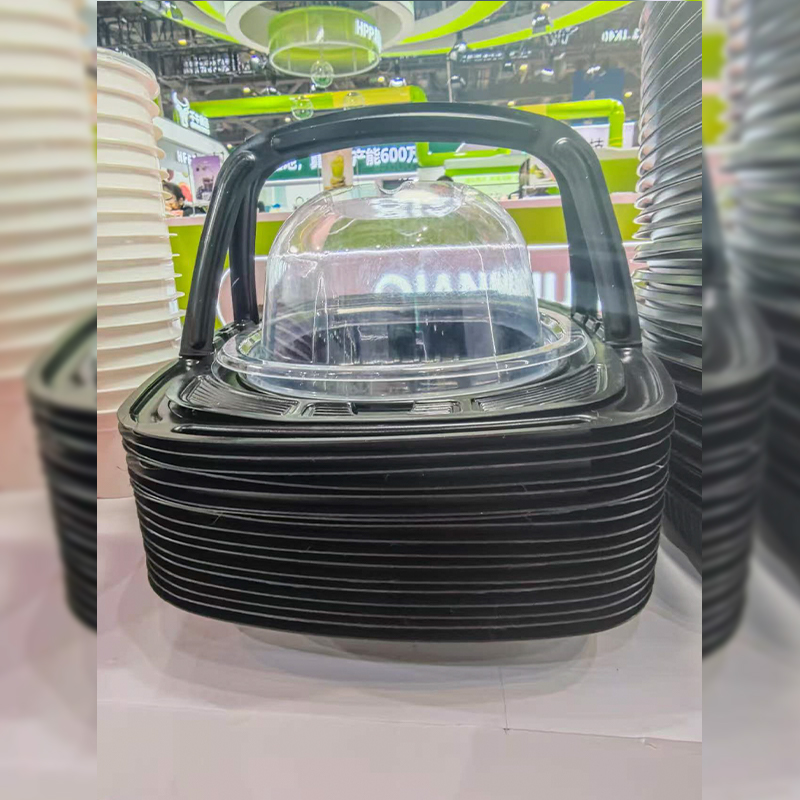 Disposable Plastic Roast Chicken Box with Integrated HandleThis thermoformed food-grade container combines a clear dome and sturdy handle for easy carry, suited for whole chickens and roasted poultry. Its leak-resistant seal and stackable design support deli displays and takeout.View Product →
Retailers also value material efficiency. Because the sheet is formed rather than injection-molded, thermoformed containers can achieve thinner walls, lighter weight, and a lower unit cost while keeping the rigidity needed for stacking and sealing. That balance matters when margins in the deli counter are tight. In self-service islands, the visibility of clear packaging also reduces shrink, since employees can check product quality and remaining stock without opening every box.
Design Elements That Maximize Impulse Sales
Clarity alone is not enough; the right details amplify it. When evaluating containers for supermarket programs, buyers should look for these four visual cues:
| Visual Cue | Shopper Message | Expected Response |
|---|---|---|
| Crystal-clear side walls | Fresh and honest quality | Shopper stops to inspect |
| Snug, secure lid | Protection and hygiene | Confident grab-and-go action |
| Built-in handle or grip | Easy to carry | Item goes straight into basket |
| Clean labeling zone | Professional brand story | Higher perceived value |
A well-designed container does not compete with the food; it frames the food. Minimal graphics keep the product as the hero, while a neat label area builds brand recognition that carries the customer to the next purchase. The three cues that matter most are: TransparencyProtectionConvenience.
In practice, the best-performing supermarket displays treat the container as a supporting actor. The package has to be quiet enough to let the product shine, yet distinctive enough to be recognized at a glance. Reaching that balance is easier when the container supplier cooperates closely with the retailer through prototyping and shelf testing, adjusting wall thickness, rim shape, and lid design until the display feels right.
Practical Ways Supermarkets Can Leverage Clear Containers
Positioning high-clarity thermoformed containers in the right location is only half of the strategy. The following tactics help retailers convert visibility into revenue:
- Use clear containers for high-margin prepared foods at the entrance of the fresh food section, where dwell time is highest.
- Standardize portion sizes so rows of transparent containers create an orderly, appetizing display rhythm.
- Keep the front and top of the package free of stickers or printing that blocks the view; move pricing and barcode to the base or a small corner label.
- Pair transparent packaging with warm lighting to intensify the natural color contrast of the food inside.
For buyers balancing environmental goals with sales targets, the key factors in choosing eco-friendly commercial packaging (including material weight, recyclability, and supplier certifications) can guide the selection of a clear container that is also responsible. Many thermoformed options are available in recyclable PET or recycled-content formulations without losing optical clarity.
Frequently Asked Questions
Q1: What are high-clarity thermoformed containers?
They are transparent packaging trays, domes, clamshells, and boxes produced by heating a plastic sheet and forming it over a mold. The process creates thin, clear walls that display the food inside while providing rigidity and a secure closure.
Q2: Why do transparent containers drive impulse buying?
Transparency removes uncertainty. Shoppers instantly see the color, freshness, and portion size of the food, which triggers appetite and builds trust. When the visual proof is visible, the decision to buy becomes faster and more emotional.
Q3: Can thermoformed containers hold hot and cold foods?
Yes. Thermoformed containers are available in food-grade PET, PP, and other materials that perform well in chilled deli displays and warm prepared-food counters. Always confirm the temperature limits and food-contact compliance with the supplier before use.
Q4: Can clear thermoformed packaging support a private-label brand?
Absolutely. Clear containers leave space for a small label, an embossed logo, or a printed film sleeve. Retailers working with a flexible packaging manufacturer can customize size, thickness, and lid features to match their own brand line.
In a supermarket aisle, attention is the scarcest resource. High-clarity thermoformed containers earn that attention by making the product impossible to ignore. They combine the visual honesty that triggers appetite with the durability, stackability, and cost efficiency that supermarket operations require. For retailers and food brands that want to convert browsing into buying, clear packaging is not a detail; it is the strategy.

GUANXUAN
Delivering safer, greener packaging solutions for our customers and working with partners to build a more sustainable future
Ready to Begin?
Quick Links
Product Categories
Contact Information
 Email: [email protected]
 Phone: +86-18226619205
 Address: No. 89 Jingwu Road, Economic Development Zone, Quanjiao County, Chuzhou City, Anhui Province, China
QR Code

Copyright © Anhui Guanxuan Environmental Protection Technology Co., Ltd. All rights reserved.
Wholesale Eco-Friendly Packaging Products Manufacturers
